SRO. 229... Annual Verification Certificate inplace of Quaterly Verificate Certificate   C.E PDD Order     Budget Highlights 2011-12    Budget Speech 2011-12    Budget at a Glance     Budget's Key Features     Budget Speech 2011-12 by Pranab Mukherjee    Employment Fair from 08-02-2011 to 10-02-2011     Visit of Mr. S.S. Slathia     Visit of .Jenab Omar Abdullah,Hon'ble Chief Minister,Jammu & Kashmir State on Wednesday 12th January 2011,at 12.30 P.M. in BBIA Bhawan.     Placement fair at Govt. Polytechnic,Bikram Chowk,Jammu w.e.f. 14th January 2011 to 22nd January 2011.        All worthy Members are requested to send their viewpoints on        GST (Goods & Service Tax) which will come into force on 01-04-2010 , to Bari Brahmana Industries Association             Visit of Mr. Abdul Gani Malik, Hon'ble minister for Labour & Employment, Higher Education shall be visiting BBIA Bhawan on 5th of this month.

-

Introduction

Among the six basic principles of the governance underlying the National Common Minimum Programme of the Govt. of India, sustained “economic growth in a manner that generates employment” has a pride of place. It also describes the small scale industries as “the most employment - intensive segment”.

This is indeed so. The small scale industries have a long history of promoting economic growth that is employment-oriented and spatially widespread, and hence inclusive. The contribution of this segment to the economic sinews of the country is no less significant. Nearly 39 percent of the gross manufacturing output and 34 percent of the exports of India arise from these enterprises. During the last four years of the 10th plan, the output of the segment has recorded a real growth rate of 8.87 percent annually. Over six thousand products manufactured by these include several sophisticated items used in high technology areas like nuclear power, missile and space programmes, information technology, biotechnology, etc. The level of exports by this segment also testifies to its overall competitiveness in the global markets
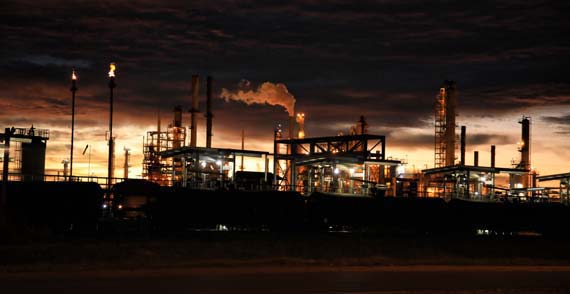
While examining the characteristic features of the economy of J&K State, one comes to the conclusion that the State is economically backward as compared to the other States of the Country. In view of this state of affairs, it is highly essential to diversify its economic structure by developing industries so that the socio-economic conditions of the State are improved. Industry will not only play a significant role in providing employment to a large number of educated youth, it will also give solution to the unemployment crisis through which the state is passing during these days, and also would contribute to raising per capita productivity.

We are aware that ours is a Land Locked State and is severely handicapped due to locational disadvantages. This results in increase in the cost of production as compared to our neighboring States. In order to offset this additional cost, the State Govt. and Govt. of India has provided special package of incentives to the industrial sector so as to make it competitive. However the effect of these concessions cannot be presumed as direct addition in profits.

When State Industrial Policy was introduced w.e.f 1st Feb. 2004, some new elements were introduced:

a)

Developing World Class Infrastructure for speedy industrial development.

b)

Encourage industrialization of the backward blocks of the State.

c)

Encourage existing industrial units to modernize.

d)

Provide incentives on brand promotion keeping in view the role of brands in promoting sales.

e)

Concentrate on thrust areas for development as per the list of Central Govt.

This spirit behind this was to encourage and sustain the existing struggling industry of J&K out of red and simultaneously attract new investments. But unfortunately the desired results could not be attained and we could muster only 3000 Crores of new investments in comparison to 50000 Crores by Himachal Pardesh during the same period.

However, we are convinced that J&K Small Scale Industry has a future. But while looking at the future, certain considerations will need to be kept in mind. The most important is the diversity in the small scale sector. We do realize that there are still some speed breakers on our super-highway to success. The rationalization of the tax structure is one such example. A good deal of reforms has already taken place and some are under way. Even today the single-man unit is subjected to a minimum of 37 inspections, 52 laws and 116 forms and registers. The govt. should try to frame a single legislation for the small scale sector which would reduce procedural hassles and do away with the Inspectorism. An environment should be created where the accent is on trust rather than mistrust ; on facilitation rather than regulation ; and, on togetherness rather than on division, where the words ‘you’ and ‘I’ are replaced by ‘ourselves’.

The foregoing discussion leads to several conclusions:-

1. The role of the government and its agencies is very important in promoting competitiveness of the industry in general and small scale industries in particular.

2. Innovative and tactical ways of protection needs to be devised for providing a period of adjustment to SSI’s and also lending them some breathing space.
3. The govt. should take some financial and tax measures to assist SSI’S such as :

provision of subsidies for R&D costs,
guarantee of loans when extended by the Credit Guarantee Association,
provision of venture capital funds,
tax reduction for capital funds,
loans at low interest rates,
loans for modernization of equipment, and others.

4. Opening of trade routes with Pakistan like R.S.Pura – Sialkot,
Rajouri – Mirpur routes.

5. Setting up “SAARC Knowledge Platform” including areas like e-networks, energy, water, healthcare, agriculture, food processing and capacity building - which will meet the unique needs of regional development and help frame a road map for its time bound implementation.

6. Govt. Mind set has be changed from red- tapism to red carpet welcome to entrepreneurs which will inspire investor confidence and in return boost industrial activities in J&K.

7. For competing internationally, the firms and the entrepreneurs should develop pro-active attitude and approach, and should upgrade technology used in their SSI’s and also focus on upgrading skills and competence of their personnel through appropriate training by developing competence for training needs identification.

8. Entrepreneurs should analyze implications of all international agreements and treaties as well as other international developments in the country, industry and own enterprise.

9. Entrepreneurs should be vigilant on the changes in the factors that affect the product demand, raw material supplies and their prices and fluctuations in the same. Forecasting of these economic parameters for the firm and the industry on a regular basis would help in decisions regarding production planning, human resources management, marketing and strategic decisions like diversification, etc.

10.The SSI’s should undertake ISO 9000 and other quality management
system certifications to achieve the level playing field. Further
entrepreneurs should initiate efforts towards global success and ultimately aim at global leadership.

Thus, the J&K Small Scale Industries can successfully meet the challenge of globalization.

Home | About Us | Policies | Directory | Contact Us

Developed & Maintained By : Say Technologies